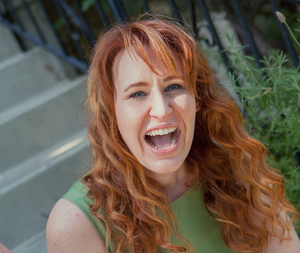
Episode 380: George on Leaving Insurance After Twenty-Five Years

Headshot of George beside the episode title, George on leaving insurance after twenty-five years. Why specialists don't have to settle for peanuts.

You know the lunch break that disappears into a hold queue. A claim comes back denied for a reason nobody can explain, or it never comes back at all, and you spend the time you were supposed to eat trying to find out where your money went. Then you walk back into session and try to be fully present for someone else's worst week.

Most therapists who stay on insurance panels are not staying because the math works. They stay because getting on panels was how they started, and nobody ever showed them what starting over without them would look like. The panels become the default, and the default becomes the practice.

George is an LCSW and Certified Sex Addiction Therapist in Lafayette, Louisiana, twenty-five years into his social work career. He has started his practice over more than once (Memphis, Nashville, a rural Tennessee county, and now Lafayette), and every one of those starts began with getting on panels. In May, he dropped all of them. Kelly Higdon hosts this conversation with George, who is also a Business School for Therapists member still working through the curriculum, which makes him a good person to ask what this looks like from the middle rather than the finish line.

Lesson 1: Once you taste autonomy, agency work stops fitting

Around 2010, George was working at a psychiatric facility with a detox unit near Memphis when a private practice owner who ran a DBT-based intensive outpatient program for substance use asked him to come on board. The pitch was simple: we will get you on some panels, you can run groups during the week, and we will pay you a good rate for them. He thought it over, took it, and calls it the best thing he ever did.

He worked for someone else only once after that, for about a year at a treatment center when he first moved to Nashville, and the same thing happened. Once you have had the freedom of private practice, he said, it is really hard to go back to an agency or a hospital, mostly because of how little time those settings give you with people. He remembers interning in Louisiana alongside state agency social workers carrying 150 clients each and seeing them about once a month. Add insurance criteria and medical necessity on top of that, and it will make your head explode if you do it long enough.

The takeaway: The pull toward private practice is often clinical before it is financial: you want enough time with people to actually help them. Name that early, because it is the thing your business model has to protect.

Transcript
Kelly (00:00) Welcome, everybody. We are here with another episode of Starting a Counseling Practice, and I am joined by George, an LCSW in Louisiana who is licensed in four states total. We're going to talk about his journey in starting private practice, and also about the path of getting off of insurance. So if that is at all of interest to you, you're going to want to listen to this. Hey, George, welcome. Let's start with what kind of practice you have today, and then we'll explore how you got there. What does your practice look like today? What kind of work are you doing? Are you in person, online? George (00:47) I'm a hybrid model. I do a lot of online sessions on Zoom, but I also do a lot of in-person sessions here in my office. I've had a big variety of jobs in my social work career. I live here in Louisiana, but for a good part of my life I lived in Tennessee: six years in Memphis and then ten years in Nashville. While I was in Nashville, I finally got to the spot where I just didn't want to work for other people anymore. I'm not going to get on a soapbox, but all the stuff with systems and insurance and criteria and medical necessity, it'll kind of make your head explode if you do it long enough. I got my degree from LSU in 2001, so I've been working as a social worker for twenty-five years. Right around 2010, I was working at a psychiatric facility that was also a detox unit around the Memphis area, and I was approached by someone who had a private practice that also ran an IOP for substance abuse based on a DBT model. He said, "Hey, you're fully licensed, man. I know they're not paying you beaucoup at that place you're working. What would you think about coming on with us and doing some private practice? We'll get you on some panels for insurance. We've got a model here. You can do all these groups during the week, and we'll pay you a good rate for these groups. Why don't you make the jump?" I had to pray about it and think about it, but I did it, and it was the best thing I ever did. Only one time after that did I work for someone else again, and that's when I moved from the Memphis area to the Nashville area, just to get established. I worked at a treatment center there for about a year. But the same thing happened. Once you get a taste of being in private practice and having that freedom, no matter how you do it, it's really hard to go back to an agency or a hospital, because it's just such a short window they give you to work with people. I remember doing my internship in Louisiana, and these social workers had 150 clients on their caseload, and they were lucky to see them once a month through some of these state agencies. It just wasn't really effective. So what I do now: I'm a Certified Sex Addiction Therapist. I do EMDR, I do some somatic work, I do trauma work with people. I do a lot of individual therapy and some group therapy, a lot of times specifically with sex addicts. I don't do couples therapy, but sometimes I do conjoint work with another therapist, where I'm usually the therapist for the person with a sex addiction and the other person is the therapist for their partner. We do this process to put everything out on the table. It's called disclosure, and it's several sessions. So that's kind of what I do. Kelly (04:05) When people are listening to this, they often think we just have people on here who started in the past year or so. What I appreciate about having someone on who has had a practice a little bit longer is that we get to see the different iterations. Sometimes it's like we're starting again, right? You move, and you're kind of starting again. How many iterations of your practice have you had? Could you take us through them? You started your practice, you got on these panels, and then what did the next one look like? George (04:39) Right. So I worked with that group practice with the IOP in the Memphis area for a couple of years and had some good success with it. That was 2009, 2010, and that's when I started my sex addiction training, which is a two-year process. I did all that and finished it, and then around 2012 I moved to Nashville and worked for a treatment center there for a year. Then I started private practice slowly, on the side, renting other people's offices, getting on panels, that stuff. When that job ended a little over a year later, probably around the end of 2013 or early 2014, I went into full-time private practice, and I've been there since. Always with a solo model. Sometimes I've shared office space with other therapists, but I haven't been part of a group practice again since then. Kelly (05:34) Have you ever thought about having a group, or is it just not for you? George (05:38) That's an interesting question, Kelly. That's one of the reasons I was interested in the business school, because I've always had some fears or issues around trusting other people, or going into business because of lack of experience. I've thought about it. It would be a great model to either have a group practice, or to recruit some other therapists around our area to be more collaborative and have a small group, even if all we did was meet once a week for supervision. It could be very helpful for doing this work. I'm one of only three in the whole city I live in who specialize in this type of work, and the ones who are here, we work with the addicts. So to find somebody to work with a partner, a lot of times they have to go online or go to Baton Rouge or somewhere. People doing this kind of work are scattered around down here, so it's challenging. It can be very helpful to have people in-house, or in a group, who run groups together, staff cases together, or do ongoing supervision. Kelly (06:44) I think sometimes our businesses come out of a need we can't meet, so we meet that need ourselves, right? If you can't find the other partners and referral partners out there, sometimes you end up creating a group practice where you have it in-house. And I kind of love that. To me, Lafayette is not... would you consider it a small town? I mean, it's a primary city in Louisiana. George (07:11) I want to say somewhere around 200,000 people. So, plenty of sex addiction, let me put it that way. I never worry about job security, and people can call me from all over the state if they want help, and sometimes that happens. Kelly (07:27) I think it's interesting, though. A lot of people think that in smaller towns you can't be specialized. George (07:33) You know what? An interesting thing: for a while I actually worked from home. Before COVID, I had started a little practice where I was working from home in a small city close to Nashville. Then I moved and bought a house right when COVID hit, about 45 minutes east of Nashville, middle of nowhere. I was the only adult therapist in the whole county. They had one other therapist who worked with kids only. And I'm telling you, with Zoom and the fact that I had a private setting, I never, ever worried about having clients. And I was literally in the middle of nowhere. Kelly (08:20) Why do you think that is? George (08:22) When you have a niche, when you have a specialty that people are seeking, they tend to gravitate toward people who have it, and they're willing to travel to get it. Like I said, it's only since May that I stopped taking insurance. At the time, I believe I was the only guy in the whole state of Tennessee taking insurance for this work. And I know I was the only one taking it in the city where I live now, up until May. All the therapists I've spoken to since I've been here are either off of insurance completely, never took it, or are in the process of getting off of it. Because why are we taking a pay cut after we did all this extra work? When you get certified to do this, it's two years. It's like getting another master's degree. We don't have to settle for peanuts from insurance anymore. Kelly (09:17) I think just with a master's degree alone, you don't need to settle for peanuts. But why now? Why did you decide to get off insurance? This happened in May, that you fully released the panels. Can you walk us through the process? Because it sounds like in a lot of your starts in practice, getting on a panel was just part of the process. What started to shift with that? George (09:42) I moved down here and got a feel for everything. I started briefly with an at-home model, but then got an office. And I started talking to other therapists about who took insurance and who didn't, and looked around at how many CSATs there were, and realized there was hardly anybody here. So why am I the only guy taking it? And also, I really had a problem. I'm not going to name the insurance company, but when I moved one time, they entered the move incorrectly, and they were sending my checks to an address that didn't exist. I didn't get paid by that insurance company for seven months. That was probably eight thousand dollars they were behind. I'd had enough. I'd had enough with copays, deductibles, having to pay somebody to chase the claims, and this kind of mess, with them sending the money to the wrong place and never contacting me. When I finally got them on the phone, they had a stack this high of checks that had been returned to them, and they never contacted me about it. Kelly (10:57) Yeah. Why bother? George (10:58) And I'm not the only one. I've spoken to other therapists, and it doesn't matter which insurance company, I'm not going to name names, but they all have these types of problems. Kelly (11:10) Right. They don't care about the barriers, because that just means they save money. George (11:14) Yeah, exactly. And they advertise all these sites where you're getting off of insurance and working for X and Y and Z, and when you go back and look, they're owned by the insurance companies. Kelly (11:28) Yes. How was it with your clients, getting off of the panels? How did that go? George (11:36) It was a little scary at first. But for the ones who valued my services, I explained the challenges. I didn't go into all the details. I just said, "Insurance companies don't care about you, and they don't care about me. They reimburse about two-thirds of what I'm worth, and then I have to pay somebody to chase all the claims. I can't stay in business that way. It's 2026, everything is going up. I can't do this anymore. I have to have a healthy business model so I can work and serve you." And a lot of them said, "Okay, I really appreciate you explaining that to me." Now, I lost a few, yes. But there's only one thing I still do that's not private pay. I have a contract with a company that sends me sessions for veterans, kind of like an EAP model. The clients don't have to pay; they're approved through this program, and I think it's a grant through the VA. I just click a button and file the claim, and within three days the money is in my account, and I can track it. So it's not like I have to deal with insurance companies. Kelly (12:57) Yeah, there are some good programs out there. George (12:58) So that helps me fill some gaps. And I started listening to you guys, going through the modules, getting pumped up. Before I found zynnyme, I had hired a business coach who was a therapist, and I met with him for a few sessions. He gave me some suggestions, so I started marketing to pastors and getting out in the community and doing some things. A lot of that has helped get the word out. And a lot of it is also just word of mouth. I got on the phone and started calling some of the other CSATs: "Who are you referring to?" And they said, "Well, we see partners, but we haven't had anybody around here yet." And I said, "Well, guess what? You do now." So I've formed some of those relationships, and it's been good. Kelly (13:45) I think community is everything. It really is important. And I think that's why, when you have a niche, it informs who is in your community. It informs who you're reaching out to. George (13:54) Absolutely. You need the right target audience. Kelly (14:01) And I think when we increase our fee or get off insurance, our clients can still value us and not be able to afford it, and that's okay too. But there are a lot of people who are willing to use their out-of-network PPO benefits with a superbill. There are people who want to prioritize therapy in their budget. It doesn't work for everyone, and that's why there are other options people can use. But at the end of the day, we're no good if we're depleted and really resentful in our practice. George (14:35) Exactly. I remember running twenty-five, thirty clients a week, doing a couple of groups, and feeling like I was run over at the end of every day, and especially at the end of the week. I had hardly any bandwidth left for anything. And I was thinking, this is not how this is supposed to be. Kelly (14:55) How are you now? What is your life like now? George (14:59) I'm a lot more flexible as far as my time goes. One of my areas of growth is staying on track to get my stuff done in the business school, because I'm still working through it, learning about tracking tasks and putting things on a schedule, budgets, and so on. I still have some questions for you guys, like, what do you mean, do a business plan? Or what does it mean to do a P&L? Kelly (15:37) Yeah, you're still learning the financial stuff. George (15:41) That's kind of where I'm at. But it's been helpful to be able to slow down a little bit and be able to breathe. My wife has noticed my stress level has come down quite a bit, because I'm not in that mentality you have to have to do it the way insurance wants you to do it. I don't like that. Kelly (16:01) I think it's a good reflection for people who are looking at starting a practice and thinking about the model they choose, and its impact not just on the business. Sometimes we think, if I'm just seeing clients, I have a successful business. But it's also: who are you when you go home? Are you able to have energy to be in relationship with the people who matter to you? Your business model influences that. George (16:23) It absolutely does. Kelly (16:25) If someone was starting a practice today, what would you say to them about what's important right now, in 2026? George (16:39) First and foremost, I would say sign up for zynnyme so you can get a baseline of what you're doing, because there are all kinds of people out there with all kinds of opinions about how to do this, and some of it works and some of it doesn't. Before you join a group, you may want to look into something like this. I would also say, if you have to start with insurance to establish a caseload, that's a choice. But think about an end game for that, a plan for it to be temporary, as far as getting a niche and moving forward so you can move to cash pay and have more freedom. A lot of people just get the degree, stay in generalist mode, and take insurance. There's nothing wrong with that. But the challenge is you're going to get a whole lot of stuff, and you're going to have to put up with a whole lot of mess. Kelly (17:41) I think even if you're a generalist, you need to stand out in how you work, right? Maybe your approach is unique, or something else still sets you apart, even though you can work with couples and kids. But for me personally, I would find it hard to work with such variety. I learned that very quickly in my practice: niching helped my nervous system stay settled, so I wasn't constantly context switching between different approaches for different things. I could focus on the way I worked and who I helped, and it gave me a lot more freedom, energetically. Well, if people want to learn more about you and your practice, where can they go? George (18:33) My website is georgecomeauxlcswcsat.com. Kelly (18:44) All right, we'll put it in the show notes. George, thank you for being here and sharing your story. George (18:47) Wonderful. You're welcome. Kelly (18:50) And for anyone who's listening, this is just a reminder that you may have several starts in your practice. You may move, you may get off insurance, you may change your niche, and it can feel like a new start. There's longevity in this work and lots of transitions. Starting is just the first time, and you'll have other times when you're starting something new, and we're here for it. If you'd love to learn more about business school, you can check it out on our website. In the meantime, share this, be inspired, and know that you can do this work and do it well, even with everything that's going on in the world. We are here to support you. Until next time.

Lesson 2: Every move is a new start

Kelly asked George to walk through the versions of his practice, and there are a lot of them. A couple of years with the IOP group near Memphis. Two years of CSAT training starting around 2010. A move to Nashville around 2012, a year at a treatment center while he built a practice slowly on the side, renting other people's offices and getting on panels. Full-time private practice since the end of 2013 or early 2014, always solo, sometimes sharing space. A home-based practice near Nashville. A house about 45 minutes east of the city, bought right as COVID hit. And now an office in Lafayette.

Every one of those starts had the same first step: get on the panels. Not because he had run the numbers each time, but because that was how he had learned to start a practice.

Kelly named something we see constantly. People hear "starting a private practice" and picture one launch. In reality you may move, change your niche, get off insurance, add a group, and each of those feels like starting over.

The takeaway: You will probably start your practice more than once. Each restart is a chance to choose your model on purpose instead of rebuilding the last one out of habit.

Lesson 3: A real specialty travels, even to the middle of nowhere

When George moved to that house east of Nashville, he was the only adult therapist in the entire county. The county's one other therapist worked only with kids. With Zoom and a private space to work from, he never once worried about having enough clients, despite being, in his words, literally in the middle of nowhere.

His explanation for why: when you have a specialty people are actively seeking, they gravitate toward the people who have it, and they are willing to travel (or log on) to get it. Lafayette has somewhere around 200,000 people, and he is one of only three clinicians in the city who specialize in this work. People call him from all over the state.

Kelly pointed out how often therapists assume a smaller market means you cannot afford to specialize. George's experience says the opposite.

The takeaway: In a small market, a niche is not a luxury. It is how people find you instead of settling for whoever is closest.

Lesson 4: Look around before you assume you need the panels

After he moved to Lafayette, George started asking other therapists who took insurance and who did not, and he counted how many CSATs were in the area. There were hardly any, and the reality was stark: he was the only one still taking insurance. Everyone else was off panels entirely, had never taken insurance, or was in the process of getting off. He believes he was also the only one taking insurance for this work in all of Tennessee when he lived there.

His reasoning for why they all left is hard to argue with. The CSAT certification is a two-year process, which he compared to earning another master's degree. Why take a pay cut after doing all that extra work? "We don't have to settle for peanuts from insurance anymore," he said. Kelly's reply: you do not need to settle for peanuts with a master's degree alone.

His advice to newer clinicians is not "never take insurance." It is this: if you start with insurance to build a caseload, that is a choice, but have an end game. Find your niche and plan your move to private pay so the panels stay temporary.

The takeaway: Ask the clinicians in your specialty how they get paid. If you are the last one still on panels, the market is telling you something.

Lesson 5: Seven months of missing checks

One insurer entered George's change of address incorrectly and started sending his checks to an address that did not exist. He did not get paid by that company for seven months, roughly $8,000 by his estimate. Nobody contacted him. When he finally got someone on the phone, they had a stack of returned checks they had never mentioned.

That was the last straw on top of a long list: copays, deductibles, and paying someone to chase claims. And he is clear that it was not about one bad company. Colleagues tell him the same kinds of stories regardless of the insurer.

Kelly said the systemic part out loud: the barriers do not bother insurers, because barriers save them money. That is the part we wish more therapists understood. Delays, denials, and lost payments are not glitches in an otherwise fair system. They are what the system does.

The takeaway: When you calculate what a panel actually pays you, include the hours spent chasing claims and the months your money sits somewhere else. That is your real rate.

Lesson 6: How George told his clients

George admits it was a little scary. He did not go into every detail. He told clients that insurance companies do not care about them and do not care about him, that they reimburse about two-thirds of what he is worth, and that he has to pay someone to chase the claims on top of that. It is 2026 and everything is going up. He needs a healthy business model so he can keep doing this work and keep serving them.

A lot of clients thanked him for explaining. He did lose a few, and he said so plainly.

Kelly added the part that keeps this from becoming a guilt spiral. When you raise your fee or leave insurance, some clients will value you and still not be able to afford you, and that is okay. Plenty of others will use their out-of-network benefits with a superbill, or decide therapy is worth prioritizing in their budget. And at the end of the day, we are no good to anyone if we are depleted and resentful in our own practice.

The one third-party arrangement George kept is a contract that sends him sessions for veterans through what he understands to be a grant-funded program. He clicks a button to file, the money is in his account within three days, and he can track it. It fills some gaps without dragging him back into insurance company paperwork.

The takeaway: Clients do not need the whole saga. They need the honest reason in a sentence or two and the respect of making their own choice.

Lesson 7: Your referral network is the people doing the work beside you

Before George found us, he hired a therapist business coach for a few sessions, started marketing to pastors, and got out into the community. But most of his referrals come from word of mouth, and from picking up the phone. He called other CSATs in the area to ask who they were referring to and to make sure they knew he was there.

He also sees a gap. The CSATs in Lafayette mostly work with the person struggling with sex addiction, so partners often have to go online or drive to Baton Rouge for their own specialized support. That is part of why he has thought about a small group practice, or even a weekly supervision group, so local clinicians can run groups together and staff cases. Kelly's observation: sometimes our businesses grow out of a need we cannot meet any other way.

Kelly put it simply: community is everything, and your niche tells you who your community is.

The takeaway: A niche tells you exactly who to call. Start with the clinicians treating the other half of your clients' story.

Lesson 8: Your business model follows you home

George remembers carrying 25 to 30 clients a week plus a couple of groups, feeling run over at the end of every day and especially at the end of every week, with hardly any bandwidth left for anything else. His thought at the time: this is not how this is supposed to be.

Now his time is a lot more flexible. He can slow down and breathe, and his wife has noticed his stress level come down quite a bit. He is honest that he is still learning the business side: building a business plan, understanding a P&L, putting tasks and budgets on a schedule. Getting off insurance did not make him a finished CEO overnight. It gave him room to become one.

Kelly connected this to their own experience. Niching early in their practice helped their nervous system stay settled, without constant context switching between populations and approaches, and that focus gave them more freedom and more energy. The question underneath it all: who are you when you go home, and do you have energy left for the people who matter to you? Your business model shapes that answer.

The takeaway: Your business model is not just a revenue decision. It decides how much of you is left at the end of the day.

Ready to Build a Practice That Doesn't Run Through the Panels?

George did not leave insurance because a business book told him to. He left because he looked around, saw that every colleague in his specialty had already left, did the math on two-thirds reimbursement and seven months of missing checks, and decided his clients deserved a therapist who was not running on fumes. Then he told them the truth and let them choose.

That sequence is one we see work over and over. The specialty comes first, because a specialty is what makes private pay possible. Then comes honest math about what the panels actually cost you. Then comes a clear, kind conversation with the people you already serve.

Business School for Therapists is our flagship program for therapists ready to build a practice that supports the life they actually want. It is a blend of live coaching and self-paced curriculum, plus a community of clinicians who normalize niching, real fees, and clinical depth. Twenty years in, it is the work we wish someone had handed us when we were spending our own weekends figuring this out.

If you are not ready for a program yet, start smaller. Ask three clinicians in your specialty how they get paid. Add up the hours you spent on claims last month. Notice which number makes you wince. That is information, and it is free.

Learn more at zynnyme.com, or keep listening: more episodes are at zynnyme.com/blog.

Key Takeaways for Therapists

  • The pull toward private practice is often clinical first: enough time with people to actually help.

  • You will likely start your practice more than once, and each restart is a chance to choose your model on purpose.

  • A real specialty fills a caseload even in a rural county or a mid-size city, because people seek it out and travel for it.

  • If everyone in your specialty has left insurance, the market is telling you something.

  • Count claim-chasing and delayed payments when you figure out what a panel really pays.

  • Clients need an honest, brief reason for the change and room to make their own choice.

  • Your niche tells you who belongs in your referral community.

  • The business model you choose decides how much energy you have left at home.

Resources

Miranda Palmer

I have successfully built a cash pay psychotherapy practice from scratch on a shoestring budget. I have also failed a licensed exam by 1 point (only to have the licensing board send me a letter months later saying I passed), started an online study group to ease my own isolation and have now reached thousands of therapists across the country, helped other therapists market their psychotherapy practices, and helped awesome business owners move from close to closing their doors, to being profitable in less than 6 weeks. I've failed at launching online programs. I've had wild success at launching online programs. I've made mistakes in private practice I've taught others how to avoid my mistakes. You can do this. You were called to this work. Now- go do it! Find some help or inspiration as you need it- but do the work!

https://www.zynnyme.com
Next
Next

Episode 381: The State of Therapy: Headway’s $9.99 Fee and Who Controls Your Practice