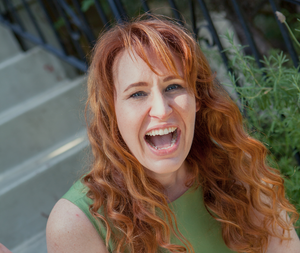
From Nonprofit Work to Somatic Therapy in San Diego: Shay’s Professional Evolution

So, you’re drawn to private practice. Maybe you’re fresh out of grad school, fueled by visions of sunlit offices and a couch that doesn’t squeak. Or perhaps you’ve given years to nonprofits, agencies, and the noble grind, and you’re craving more autonomy, flexibility, and, dare we say, joy? Maybe you daydream about meaningful work that fits your life (not the other way around). If you’re nodding, then pull up a chair, this one’s for you.
We’re spotlighting Shay (they/them), a San Diego-based somatic therapist, trauma survivor, and the kind of person you immediately wish lived in your town, whose journey to private practice is as winding, inspiring, and utterly human as the clients we serve.
If you’re a therapist ready to leap or tiptoe into private practice (and maybe even have a few “am I too late?” moments), join us for the ride. Shay’s story is an open invitation to do it your way: imperfectly, bravely, and with purpose.
Ready? Let’s dig into the lessons from Shay’s journey, seasoned generously with real talk, laughter, and a big hug of encouragement for your own path.
Lesson 1: Your Road Can (and Probably Will) Be Winding
First, let’s bust the myth that there’s a straight-and-narrow path to private practice. Shay’s route? Anything but direct.
“I actually had to pay for all of my school myself,” Shay shares. “I got scholarships and work study, and I was able to do a couple of years at the beginning, and then I had to take off time. And I went and I was a nanny in New York for, like, really wealthy people for a few years… then I came back, and I did another year of school. And then I had to take off time and work…”
Shay finally obtained their therapy license at age 50.
Was it easy? Not even close. But was it worth it? Absolutely.
Takeaway: Your path is uniquely yours. Whether you’re switching careers midlife, zig-zagging across states, or gathering wisdom from every detour, trust that you’re accumulating exactly what you need.
Tip: When you’re tempted to compare yourself to others (especially those Instagram-perfect therapists), remind yourself: winding roads often lead to the richest destinations.
Lesson 2: Success Isn’t Just About the Work, It’s About How You Do It
After years in nonprofits, shelters, schools, and supporting complex cases, Shay saw the realities of burnout up close. “I actually was asked to open a trauma clinic at that nonprofit… I was told I could do neurofeedback and somatic therapy. And I had the skills to do it, and then they changed their mind. And I didn’t want to be doing talk therapy for trauma, And so I quit and went to private practice.”
That “enough is enough” moment? It was a turning point, not just in Shay’s career, but in their relationship to their work.
It’s not selfish; it’s sustainable. You can serve without sacrificing your heart, body, or sanity.
Takeaway: You can and should build a business model that honors not just your clients, but you as a whole person. That means saying no to ‘just good enough’ and yes to practices and modalities that fuel your best work.
Lesson 3: Get Support, Find Your People, and Don’t Do It Alone
Private practice has a reputation for isolation. It doesn’t have to be that way, as Shay discovered by joining Business School for Therapists and connecting with an “accountability buddy.”
“One of the best things that I got out of business school was my accountability buddy. Gina is my accountability buddy. We have been together for over three years… I went to her wedding in Vegas last year… we still meet every single week. For over three years, we’ve been meeting and helping each other through our business.”
Therapists do best in good company, cheerleaders, colleagues, maybe even a few co-strugglers who get it.
Tip: Plug into a supportive community - be it formal business school, peer networks, or a duo who keep you anchored and inspired.
Takeaway: “I am less alone now than I was when I worked at the nonprofit, to be really, really honest,” Shay reflects. Sometimes, when you make your own space, you’re also making room for real connection.
Lesson 4: Private Practice is a Business (and That’s a Good Thing!)
Here’s a truth bomb many folks avoid: if someone pays for therapy in your office, you’re running a business. Yup, even if you aren’t tracking spreadsheets or haven’t filed a single LLC document.
Miranda, the host, says it best: “A private practice is a business. You are a business owner. If someone’s handing you a check to give them therapy, you become a business owner in that moment.”
Surprised? You’re not alone. Many therapists dodge this identity until they realize that embracing it is the only way to thrive (and avoid being exploited).
What changed for Shay? “I think the really big thing was as I did my own trauma work, how I changed as a business owner and how much my healed nervous system made a difference as far as the things that I was willing to do.”
It’s all connected: your healing, your business, your boundaries, your impact.
Takeaway: You owe it to yourself (and your clients) to run your practice like the vital business it is.
Lesson 5: Boundaries and Values. No More Exploitation
Back to the business side, but with heart: Therapists are so often expected to “take the blow” from insurance companies, tech platforms, and policies that don’t serve us or our clients.
Shay’s advice? “I don’t want to be complicit in my own exploitation. Not anymore. I just don’t wanna do that.”
This means setting fees that reflect your training, saying no to opportunities that diminish your value, and getting clear on what you’ll no longer tolerate. It means walking away, even when it’s scary.
Takeaway: “I love myself too much to do that anymore.” If you’ve ever felt guilty for wanting a living wage, revisit this line like a mantra.
Tip: If you do accept insurance (or work with third parties), know your numbers, your rights, and your non-negotiables. If you opt out, you’re not abandoning your mission; you’re reframing how you can serve (and sustain).
Lesson 6: Do the Inner Work, It Changes Everything
How does healing translate into success? For Shay, the inner journey wasn’t optional; it was foundational.
“As I did my own trauma work, how I changed as a business owner and how much my healed nervous system made a difference, as far as the things that I was willing to do… I’m such a different person now today than I was a few years ago. And I did Gabor Mate’s compassionate inquiry, and that was intense… I came out the other side such a different person and so much more gracious with myself, a lot more healed, a lot more confident in myself… And I’ve learned how to love myself, and that made such a difference in what I’m doing.”
If you notice old patterns (undervaluing yourself, struggling to market, hiding behind ‘not ready’, dreading being seen), chances are, your business will reflect those stuck points.
Takeaway: The best investment in your practice might just be your own therapy, supervision, or somatic work.
Tip: Make it non-negotiable. As Shay says: “Find your therapist who can help you overcome those things that are keeping you from living the life you wanna live… do that for yourself.”
Lesson 7: Tech, AI, and Insurance. Stay Savvy, Stay True
Let’s address the modern elephant in the therapy office: insurance brokers, tech companies, and AI. Shay’s caution? “People are not helping you start your private practice. They are making bank off of your education, your work, your stress, your skill. They are. It would be nothing without you.”
Don’t fall for shiny shortcuts; get crystal clear about third-party roles, and don’t let fear (of marketing, scarcity, or ‘not enough syndrome’) drive decision-making.
If you’re doing deep, relational, body-based work, you can stand out, even in an AI-saturated world. “If what you’re doing could be done with ChatGPT, it is time to expand your toolbox,” Miranda says, and Shay agrees: “Someone who’s had attachment trauma, never being seen, never being heard, you’re not getting that experience from AI. You’re just not.”
Takeaway: Double down on real presence, connection, and the kind of care only an embodied, attuned human can provide.
Final Words (And an Invitation!)
Shay’s story is an invitation to do private practice differently: with a full heart, robust boundaries, and the clarity that you are not, in fact, just a cog in the machine.
What’s Shay most excited about now? Launching an online course for people pleasers, especially business women, helping folks untangle those old knots and live authentically.
Shay’s advice for your next step? “I had to work on my fear of being seen, and I had to work on my feeling of not being enough. When I was able to really go in and do a lot of this deep healing, that changed everything.”
Yes, you can build a practice that reflects your values, strengths, and dreams, while also creating more healing for yourself.
Ready for Your Own Magic?
If you’re ready to take your next steps, as a business owner, a healer, a someday-celebrant of winding paths, start by finding your support system and investing in your growth.
Want to dive deeper into Shay’s world of anxiety and trauma healing? Visit overcomeanxietytrauma.com.