From Burnout to Balance in Private Practice with Beth
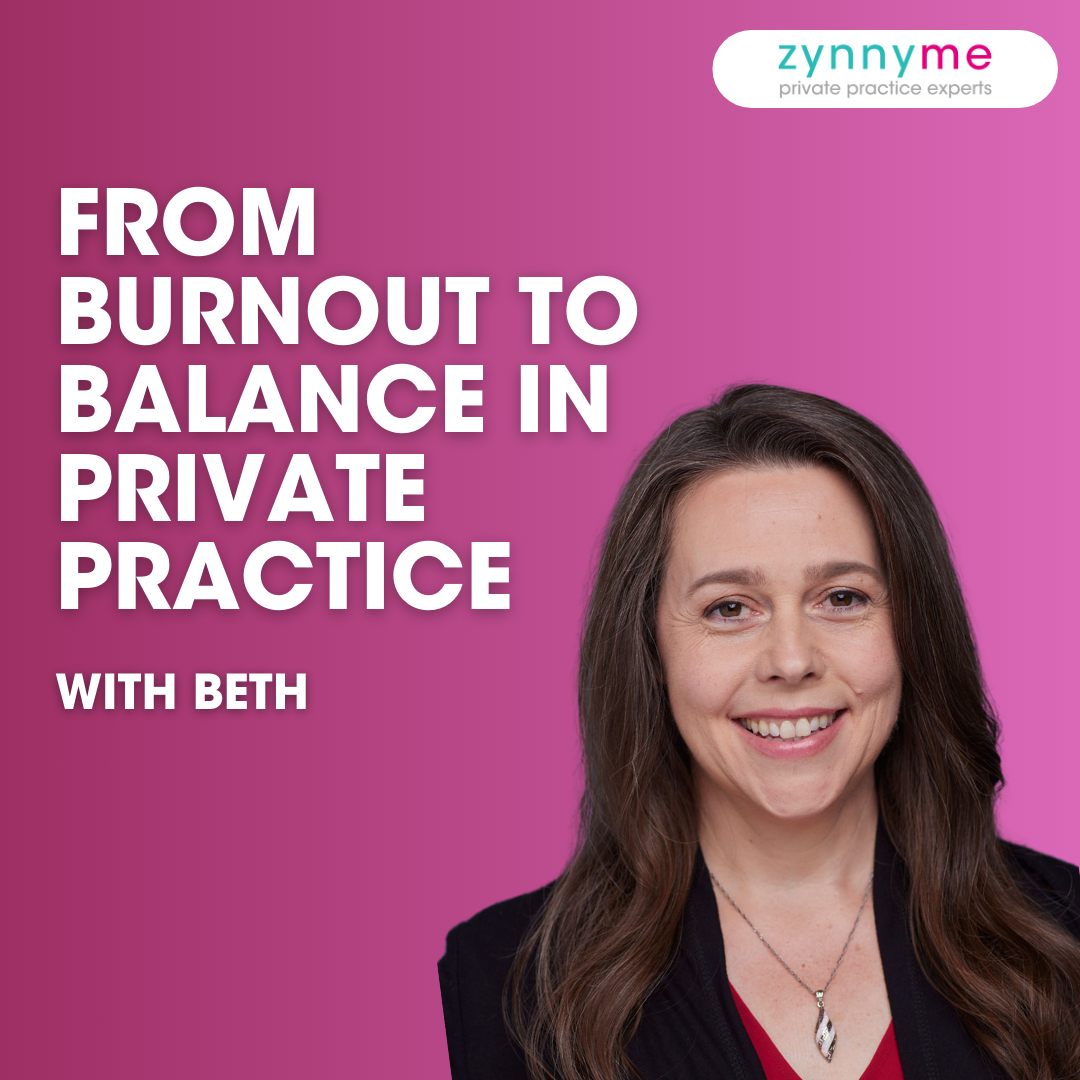
Building a Private Practice: Lessons from a Maryland Therapist in College Park
So, you want to build a private practice. Maybe you’re a clinical newbie, notebook bursting with dreams and sticky notes, or perhaps you’re a seasoned pro who’s tired of the bureaucracy and endless staff meetings (looking at you, Clinical Team Meeting at 8 a.m.). Maybe you just want the freedom to decorate your office with enormous potted plants or finally say yes to clients who light you up, or—let's be real—say no to those who leave you dreading 3:00 on Thursdays.
Whatever draws you toward this winding path, you’re in good company. Take it from Beth Charbonneau, a Maryland Therapist in College Park, who’s spent years building a private practice that actually works for her. If you’re considering venturing out on your own, Beth’s story is proof positive that the journey might be winding and unpredictable—but absolutely worth the adventure.
Ready to dig in, learn from her lessons, and maybe even save yourself a stumble or two? Let’s go!
Lesson 1: The Winding Road Is the Only Road
Beth Charbonneau started her private practice in 2004. (Yes, almost two decades ago. Wearing flip phones and “Friends” references like badges of honor.) Before that, Beth was in a large inpatient residential program. “It was a really great starting point for my career. I learned a ton, and it was really hard and exhausting,” she admits.
Ah, exhaustion: that familiar companion to so many mental health professionals. It was Beth’s desire for more autonomy—for both the kind of clients she served and her own work-life balance—that ultimately sent her down the path to private practice.
Takeaway: If you’re building a private practice, expect winding roads, unpredictable weather, and moments where you’ll wonder if you should have just bought a coffee cart instead (with fewer insurance forms, at least!).
Tip: Remind yourself, as Beth did, that the freedom to choose your clients and path is a meaningful reason for braving the unknown.
Lesson 2: Redefining Success (Again and Again)
Here’s an open secret that nobody likes to say out loud: the benchmark for “success” in private practice is perpetually moving.
Beth nailed it. “Just when you're like, oh, I just wanted a practice with 10 clients, now I have that… Now I wanna practice with this… The definition of success moves.”
Beth’s own definition of success shifted over time, settling (for now) on a practice that “helps take care of me while I take care of my clients and my life.”
Takeaway: Whether it’s the number of clients, financial sustainability, or the joy you feel on Monday mornings, your success metric is supposed to move—because you’re growing, your life is changing, and you’re allowed to want new things.
Tip: Check in with yourself (quarterly, yearly, whatever works!) about what success means to you. THEN, build your practice around that, not what everyone else on Instagram is doing.
Lesson 3: Avoiding the Burnout Trap
If you’re a therapist, you know burnout. If you don’t, call us—because we want your secrets.
For Beth, there was definitely a season (or five…) when she was “really exhausted and feeling very burned out, seeing too many clients to reasonably feel like I was taking good care of myself.” She didn’t feel like she could take time off, keep up with her own learning, or even pay her bills in comfort, especially when inflation struck.
It all culminated in a COVID diagnosis, which forced her to stop—really stop—for the first time in a long time. “I was forced to rest, and I didn't feel like I could take as much time off as I needed to, but there was no way I could absolutely push everything at that point.”
Takeaway: You don’t have to wait for a health crisis to make changes. Burnout is a sign that the system isn’t serving you (and your clients probably notice, too).
Tip: If you’re feeling stretched too thin, consider reducing your caseload, revisiting your schedule, or taking structured time off. Learn early to make space for yourself.
Lesson 4: You Don’t Have to DIY Everything
Beth spent more than a decade DIY-ing her business. “I had no idea what I was doing. You don't know what you don't know and if you can get help and support from people who've been down the road… it's gonna go a lot easier.”
Game-changer moment: Beth joined a business school for therapists and, for the first time, fully embraced the role of business owner. She got a buddy for accountability, and they stuck together through the slog. “We made a pact that we were gonna stick like glue, and we’re gonna meet every single two weeks… and we held each other accountable.”
Takeaway: Accountability buddies aren’t just for the gym. Support and structure are the secret ingredients to pulling yourself out of overwhelm.
Tip: Find your tribe—maybe a mastermind, a business coach, or an accountability buddy—and make a pact. Don’t underestimate the power of community, structure, and a bit of outside expertise. Oh, and be open to receiving help (not just giving it).
Lesson 5: Sometimes, Just Trust the Process
Ever heard that classic “trust the process” mantra? Yes, it sounds like something your yoga teacher might murmur, but Beth actually walked the walk. Instead of cherry-picking advice, Beth committed: “I decided I was going to not put my ideas of what I thought was right. I wasn't gonna skip around. I was gonna go in order. I was going to assume that what I had done so far wasn't working, so I was just gonna listen… even if I didn't think [the tasks] were necessary or didn't wanna do them.”
Beth started with her vision—an exercise in picturing her ideal day, which reshaped what she wanted in her business and life. From there, she got systematic: refining her processes, streamlining her schedule, actually looking at her financials (gulp), then getting into the nitty gritty of marketing and outreach.
Takeaway: The step-by-step route might be less glamorous than “following your gut,” but it saves you from endlessly reinventing the wheel.
Tip: Follow a proven blueprint, especially when you’re overwhelmed. Get the basics sorted before chasing after the shiny marketing tasks.
Lesson 6: The Secret Life of Burnout and Boundaries
You know the phrase, “put your own oxygen mask on first”? You’ve probably recommended it to clients. But how often do you practice it? For Beth, prioritizing self-care—not in theory, but in action—was transformative.
She found that the more she valued her own needs, the better therapist and business owner she became. No more “just barely hanging on month to month, either financially or energy wise.” The goal: sustainable work-life balance. She’s honest that it’s still a work in progress—especially as family needs shift and life changes shape the business—but she’s committed to iterating and refining.
Takeaway: The business adapts to your seasons of life. It shouldn’t cost you your health.
Tip: Build your practice to serve you, not the other way around. Regularly re-evaluate your boundaries, schedules, and client load.
Lesson 7: The Proud Grown-Up Move (And Why It Matters)
After years of subleasing, Beth took a big leap: she signed her first lease, all by herself. “It felt very grown up… I love my little space. It's really lovely, and it felt really good to feel like, oh, I'm really solid and in a place where I can do this.”
That stability and sense of ownership are more than symbolic—they’re proof that step by step, you are building something lasting and real.
Takeaway: Celebrate your milestones, however small or “ordinary” they might seem. Progress happens one bold move at a time.
Tip: Mark your own moments of progress—a lease, a new website, your first week fully booked, your first day off for an actual vacation! It all counts.
Lessons for Future Private Practice Owners (Yes, You!)
Beth’s advice for practitioners who feel overwhelmed? “Get help. Get support. Talk to people who know what they're doing…”
It’s common for therapists to think of their work as a calling, not a business. There’s nothing wrong with that—but once you acknowledge that you’re a business owner, everything shifts. That shift opens doors to resources, strategy, and freedom that transforms both your work and your life.
To those new therapists, DIY diehards, and seasoned clinicians eyeing the exit from agency life, Beth’s story is an open invitation. You can choose something different. You don’t have to build your practice alone. There are templates, coaches, communities, and business programs out there, just like the one Beth used.
And when you invest in your own process—even if it feels intimidating or “extra”—you’re ultimately investing in the quality of care you provide your clients.
Ready to Start Your Own Private Practice?
Whether you’re setting up shop in Maryland, New York City, or a tiny mountain town with more sheep than motorists, Beth’s model works. In fact, if you’re in the area and looking to connect or learn more about Beth’s approach to anxiety, mindfulness, embodiment, and hypnotherapy, check out Beth Charbonneau, Maryland Therapist in College Park.
Beth’s journey is a playful (and real!) reminder: building a private practice is both an inside job and an outside adventure. Expect winding roads, yes—but also moments of pride, new friendships, and a life you get to shape, every step of the way.
Top Takeaways for Building Your Practice
Redefine success regularly—What worked for you two years ago may not be enough now. That’s okay.
Don’t wait for burnout to force change—Make sustainability and boundaries your best friends.
Get support!—No shame in not doing it alone; just don’t.
Follow a structure before re-inventing the wheel—There are systems that work; use them.
Celebrate milestones (big and small)—Progress is progress!
Remember, you’re not just a therapist; you’re also a business owner—Own it!
If you’re looking for more resources or community, don’t forget to check out Business School for Therapists—or reach out to a fellow Maryland Therapist in College Park like Beth for inspiration.
Here’s to your winding, beautiful, unpredictable adventure!
Interested in learning more about Beth? Visit Beth Charbonneau | Maryland Therapist in College Park.